

Most underrated used cars: 2–2.5 million TL
In our live streams, we try to find cars that give you the most value for your money, best meet your criteria, and won’t break your bank or cause you headaches. Some models become popular—bought and sold quickly—so consumers purchase them without comparing rivals, and their market values rise excessively. On the other hand, this creates “coupon cars”: overlooked models that aren’t in high demand but actually offer more value and fewer issues than expected. Last month in this article series we covered models between 1.5–2 million TL, and in the following installments, we’ll highlight such hidden gems across different price ranges and classes. This month, we’re looking at the frequently asked 2–2.5 million TL band.
Volkswagen Touareg 3.0 TDI (2010–2018)
What to watch for?
The P7 Touareg is considered relatively trouble-free given its engineering level, but parts and labor are expensive. It’s recommended to replace the camshaft chain tensioner at 150,000 km; post-2013 3.0 TDIs switched from four chains to two, improving reliability. Common issues include AdBlue tank/heater/pump failures, EGR cooler leaks, and DPF clogging—just like in all modern diesels. The Bosch CP4 HPFP (high-pressure fuel pump) is chronically faulty, as in BMW N57s; some owners retrofit the sturdier CP3 to cut costs. Air suspension pumps and bellows can fail. Propshaft bearing bushings tear, and oxygen sensors often fail. The Japanese Aisin gearbox is robust, but transmission servicing and oil changes are essential every 80–100,000 km.
Jaguar XJ 2.0i (2010–2019)
Codenamed X351, the eighth-generation XJ is one of the last Jaguars we know (and love) in its traditional form. Due to tax advantages, the 2.0 turbo petrol engine is the most common choice in this price range, paired with the famous ZF 8HP. The XJ received a small facelift in 2013 and a major one in 2015; the former revised the suspension, while the latter added driver-assistance features like lane-keep assist and adaptive cruise control. The LWB (long wheelbase) version is 125 mm longer. The car uses conventional front suspension and rear air suspension. At nearly 5.3 m long, it shrinks around you in spirited driving, almost turning into a hot hatch; with its balance of comfort and handling plus steering response, the XJ holds a special place as a genuine driver’s car in the luxury segment. Much of this agility comes from its aluminum chassis, keeping curb weight to 1,761 kg—about 150 kg lighter than rivals on average. The lavish cabin blends leather, wood, and chrome harmoniously. The optional 1,200 W Bowers & Wilkins sound system was replaced by Meridian in later years.
What to watch for?
The last XJ is, contrary to Jaguar’s bad reputation, more reliable than the German-dominated F-segment competition. The 240 hp 2.0 i4 is actually Ford’s EcoBoost; Jaguar switched to its own Ingenium petrol engines after 2017. Fuel pump failures are possible, and water pump leaks are especially common in pre-2015 cars. The expansion tank is plastic and tends to crack over time under heat and pressure, requiring replacement. Cooling hoses are also plastic, prone to breaking and causing coolant leaks and overheating. Intercooler ducting is plastic as well, eventually cracking and needing replacement. After 100,000 km, front suspension often becomes noisy, requiring new arms and/or bushings. Rear air suspensions may start leaking, requiring new pumps and/or bellows. On pre-2013 cars, rails around the panoramic sunroof can rust. Air-conditioning compressors and alternators can also fail.
Lexus LBX (2023– )
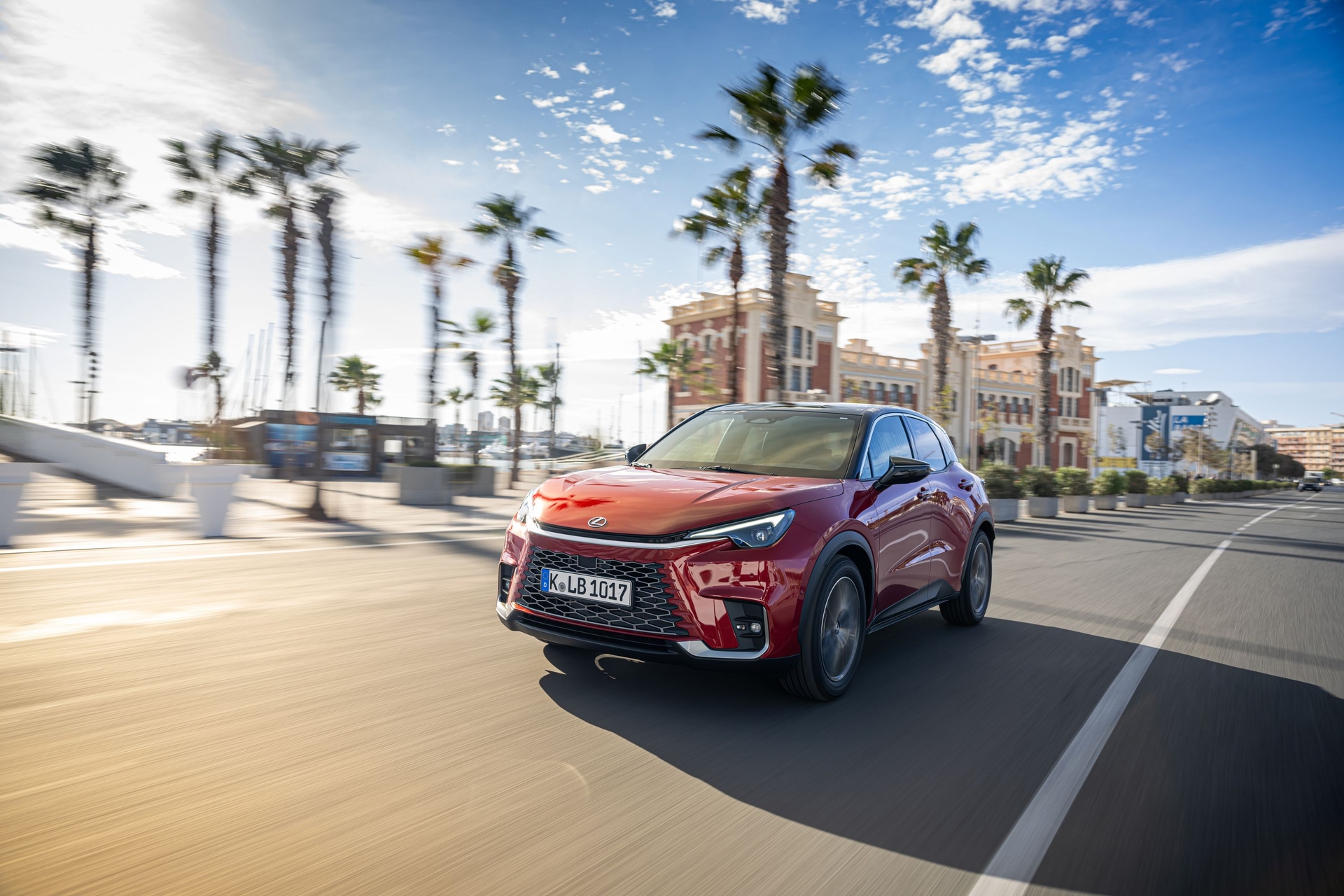
The LBX can be described as the premium version of the Toyota Yaris Cross, available in four trims: Elegant, Relax, Emotion, and Cool. These are more about style than equipment: Elegant and Relax have lighter, elegant interiors, while the others are sportier with darker colors; Emotion and Cool also feature dual-tone exteriors. The full hybrid LBX produces 136 hp and 185 Nm, with the electric motor alone delivering 94 hp. It uses the long-lived e-CVT. Lexus worked extensively to raise insulation, material quality, and refinement over the Yaris Cross: different engine mounts to reduce vibration, dual-pane glass, acoustic insulation, alcantara-leather trim, and climate control that adjusts left/right temperature depending on sun angle. Equipment includes a 13-speaker Mark Levinson sound system and heated seats and steering wheel. Fuel consumption averages around 4.5 L/100 km, dipping below 4.0 in the city, and its 10.4 m turning circle eases urban maneuvers.
What to watch for?
The LBX’s M15A-FXE engine is different from the three-cylinder unit we previously mentioned as having bearing failure risk in Corollas. There, the M15A-FKS makes 125 hp, while here it produces 90 hp and runs on the Atkinson cycle (rather than Otto), resulting in lower consumption as well as lower output. Downsides include no hood struts, torsion-beam rear suspension, cramped rear space, no sunroof, and firm seats on long trips. Driving dynamics are excellent, but the suspension is stiff, creating a mismatch between the sporty chassis and efficiency-oriented powertrain. When the petrol engine kicks in at low speeds for charging, noise seeps into the cabin. Finally, 12V battery failures are common; when it dies prematurely, doors won’t unlock. Some owners replace the original 35 Ah battery with a 45 Ah unit from another brand.
So, what models up to 2.5 million TL do you consider hidden opportunities—those with weak demand but high value? Please share in the comments.
9 Comments