

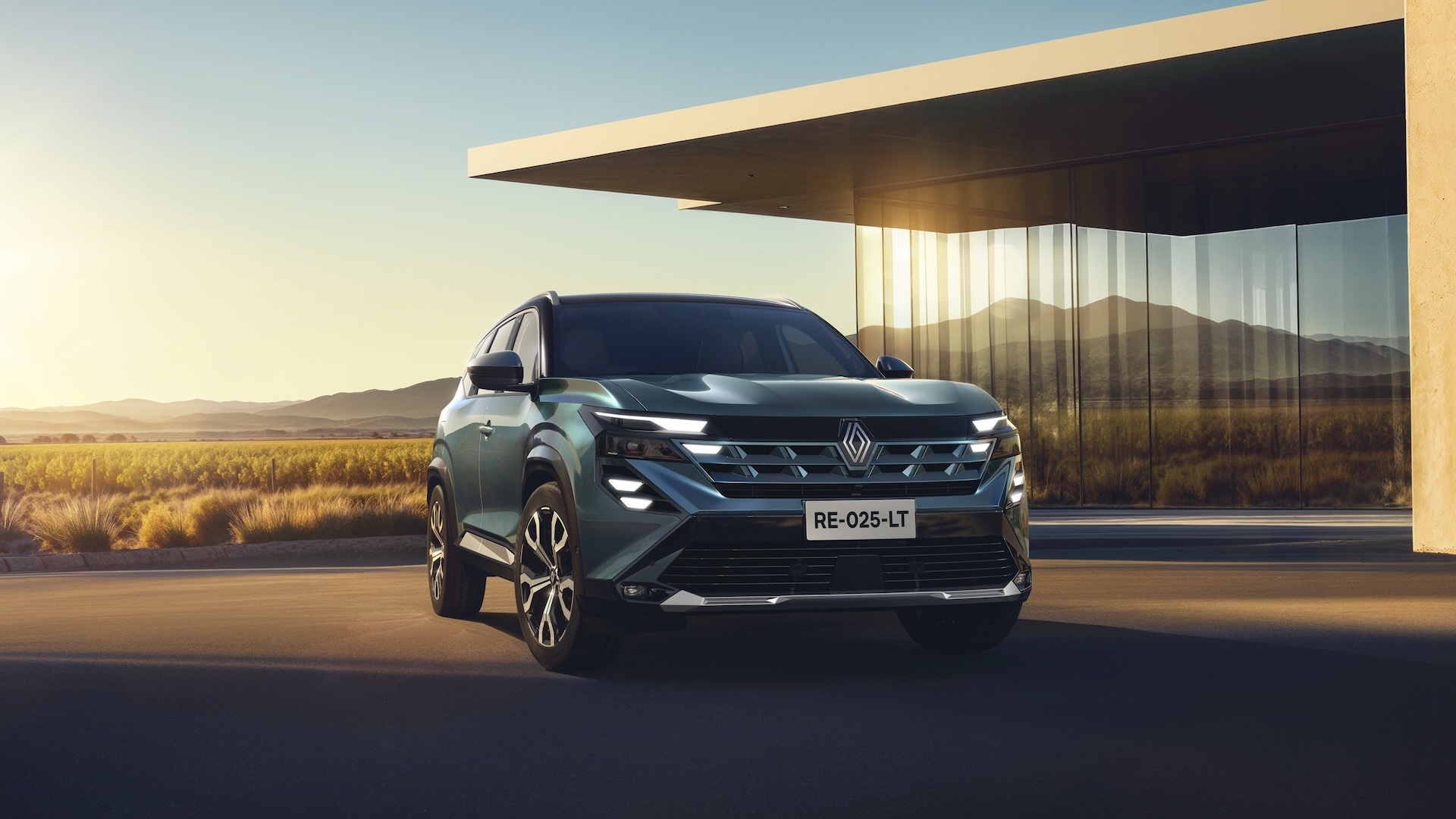
Renault Boreal analysis
The new Renault Boreal has recently become the car I am asked about most frequently.
Before purchasing a newly launched vehicle, I generally recommend waiting at least one year so that any problems can emerge and early production defects can be resolved. For customers who are already considering buying one, the main points to keep in mind regarding the Boreal are as follows:
- The vehicle uses the same platform as the Dacia Bigster, which itself is essentially an extended derivative of the Duster. The Bigster is primarily aimed at European and Mediterranean markets, while the Boreal is sold in Latin America, Turkey, Eastern Europe, the Middle East and Africa.
- The Dacia Bigster received a three-star Euro NCAP rating. However, the Boreal has not yet been tested, and its additional safety equipment may allow it to achieve a higher score.
- The turbocharged 1.3 TCe petrol versions use the same transmission as the current Clio: the six-speed wet-clutch Magna DW23, formerly developed by Getrag. It actually uses four physical gear ratios, but employs a “gear-bridging” system to create two virtual ratios, providing six forward ratios in total.
- The Magna DW23 has also been used in Renault’s Kardian 1.0 TCe B-SUV, which has been sold in South America since March 2024. Particularly in Brazil, the most commonly reported transmission-related complaints include:
- “Shift to P” warnings in heavy traffic
- Temporary transmission shutdown or loss of operation
- Jerking and transmission fault messages
- The full-hybrid 1.8 E-Tech versions use a clutchless, multi-mode dog-box transmission. In this system, two electric motors, the battery and the gearbox operate together. There are four ratios for the internal-combustion engine and two separate ratios for electric driving. The hybrid Duster 1.8 E-Tech and Austral 1.2 E-Tech operate according to the same basic principle.
- There is not yet enough feedback from vehicles sold in Turkey. However, the Boreal has been on sale in Brazil since late 2025, and several complaints have already begun to accumulate:
- Engine-management or “anti-pollution system” warnings
- Multimedia, Bluetooth and connectivity dropouts
- Warnings related to parking sensors and driver-assistance systems
- Electronic faults involving the key card, electric windows and electronic parking brake
- Complaints regarding paint quality, door, headlamp and tailgate alignment, and general assembly quality
- It should be noted that Brazilian-market vehicles are produced in Curitiba, while Boreals sold in Turkey are manufactured in Bursa. Brazilian Boreals also use a 1.3 TCe Flex engine producing 163 hp on ethanol and 270 Nm of torque. This engine has different fuel-injection and emissions calibrations so that it can operate on both petrol and ethanol. The Turkish-market Boreal 1.3 is petrol-only and produces 145 hp and 245 Nm.
Prices
- Evolution: TRY 2,194,000 — list price TRY 2,380,000
- Techno: TRY 2,269,000 — list price TRY 2,700,000
- Iconic: TRY 2,860,000 — list price TRY 3,050,000
The other powertrain option, the 160 hp 1.8 E-Tech hybrid, costs approximately TRY 3.4 million in Iconic trim.
Because it is locally manufactured, the Boreal 1.3 TCe can also be purchased under Turkey’s Special Consumption Tax exemption scheme. Under this exemption, the list price is reduced by approximately 45%.
Sources
11 Comments