

The immortal gearbox: e-CVT
Even though the name contains the term "CVT," the operating principle of an e-CVT—electronically controlled continuously variable transmission—has little in common with a traditional CVT. In fact, from a technical standpoint, the e-CVT isn’t even a transmission (a term derived from the French word changement, meaning "change"), since there is no actual gear shifting or stepwise operation. This drivetrain system, which contains no clutch, pulley, belt, solenoid, or transmission control unit, theoretically eliminates the possibility of failure thanks to its simple construction.
In an e-CVT, a planetary gear set synchronizes and combines the power produced by an internal combustion engine and two electric motors. This power is then transmitted to the output shaft via the ring gear. The power control unit determines how much power should come from the gasoline engine and how much from the electric motor. Shifting into reverse doesn’t require a physical gear; the electric motor simply runs in the opposite direction.
- Generator: Directly connected to the gasoline engine, it acts as both a starter motor and a generator. It does not deliver power to the wheels; instead, it supports the second electric motor and charges the battery.
- Motor: Directly connected to the wheels, this motor provides the primary propulsion. It also charges the battery through regenerative braking.

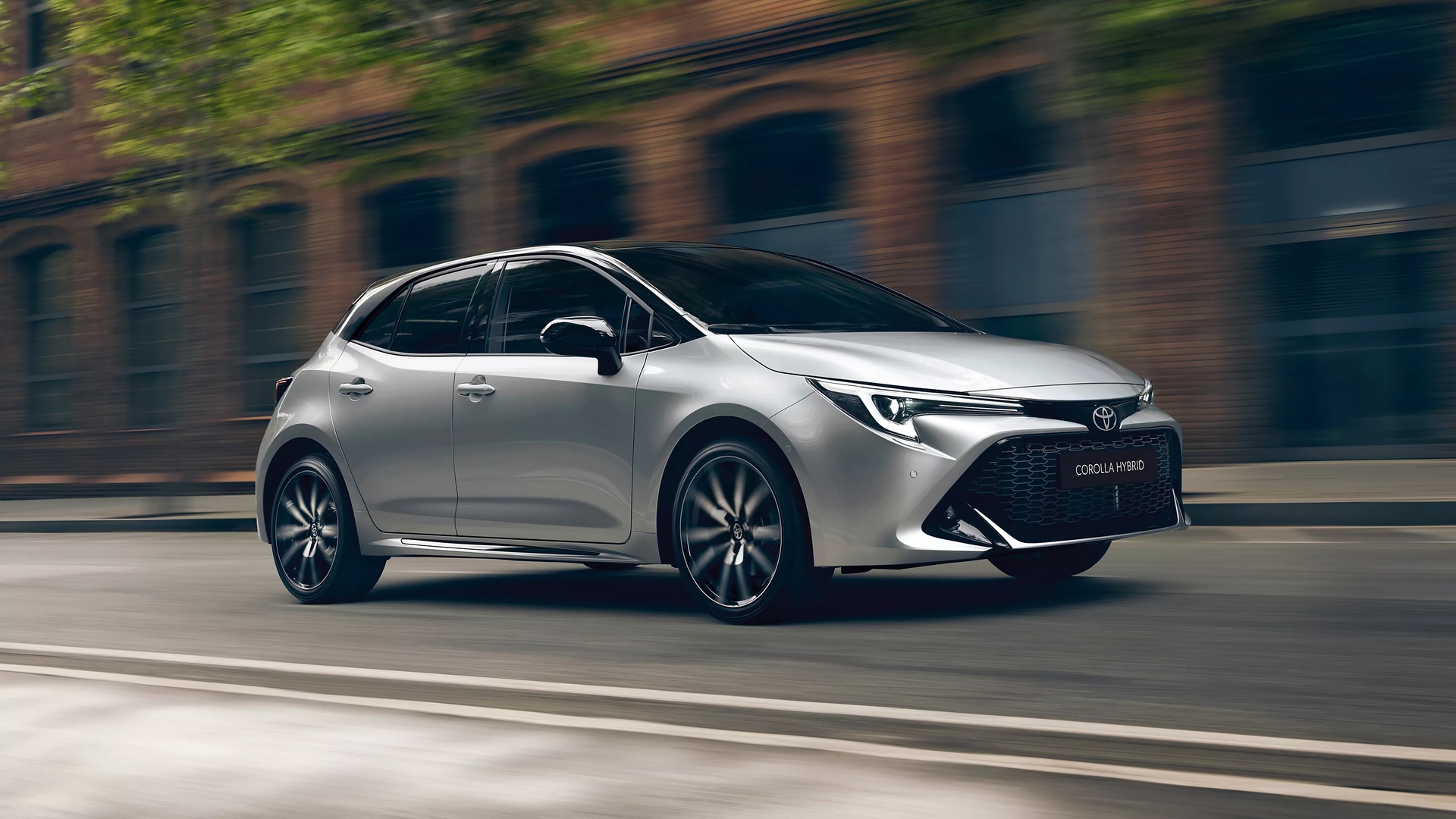
Although the term "e-CVT" was first used in 1987 in the optional automatic transmission of the Subaru Justy, that version employed electronically controlled steel pulleys. The type of e-CVT described above, which works with a planetary gear set, was introduced with the 1997 Toyota Prius. Today, Toyota calls this system Hybrid Synergy Drive, and hybrid Lexus models use the same principle.
Other brands and models using e-CVT include:
- Mazda: Started using e-CVT in the 2025 CX-50 through a partnership with Toyota.
- Nissan: Used Toyota-licensed e-CVT in the 2007–2011 Altima. In later years, they switched to e-POWER, which operates on a different principle.
- Mitsubishi: The Outlander PHEV features an e-CVT with a planetary gear set, but it is not a parallel hybrid system—meaning the gasoline engine does not directly power the wheels.
- Ford: Hybrid models like the Escape (Kuga) and Fusion (Mondeo) use an e-CVT (HF35) very similar to Toyota’s. Ford licensed over 100 patents from Toyota for key system components.
- Honda: The hybrid system known as e:HEV uses a fixed-gear transmission instead of a planetary gear set. Unlike Toyota’s system, it allows the gasoline engine to send power mechanically and directly to the wheels at high speeds. This connection is achieved via a clutch system, which introduces components like solenoid valves into the system, thereby increasing the number of moving parts and the potential for mechanical issues.
- BYD: The DM-i system used in the brand's plug-in hybrid models also does not include a planetary gear set. The gasoline engine can provide direct drive, and torque management is handled through transitions between motors and software. However, with its two-speed transmission between the electric motor and the wheels and two separate clutches, this is the most complex setup among them.
Sources
10 Comments