

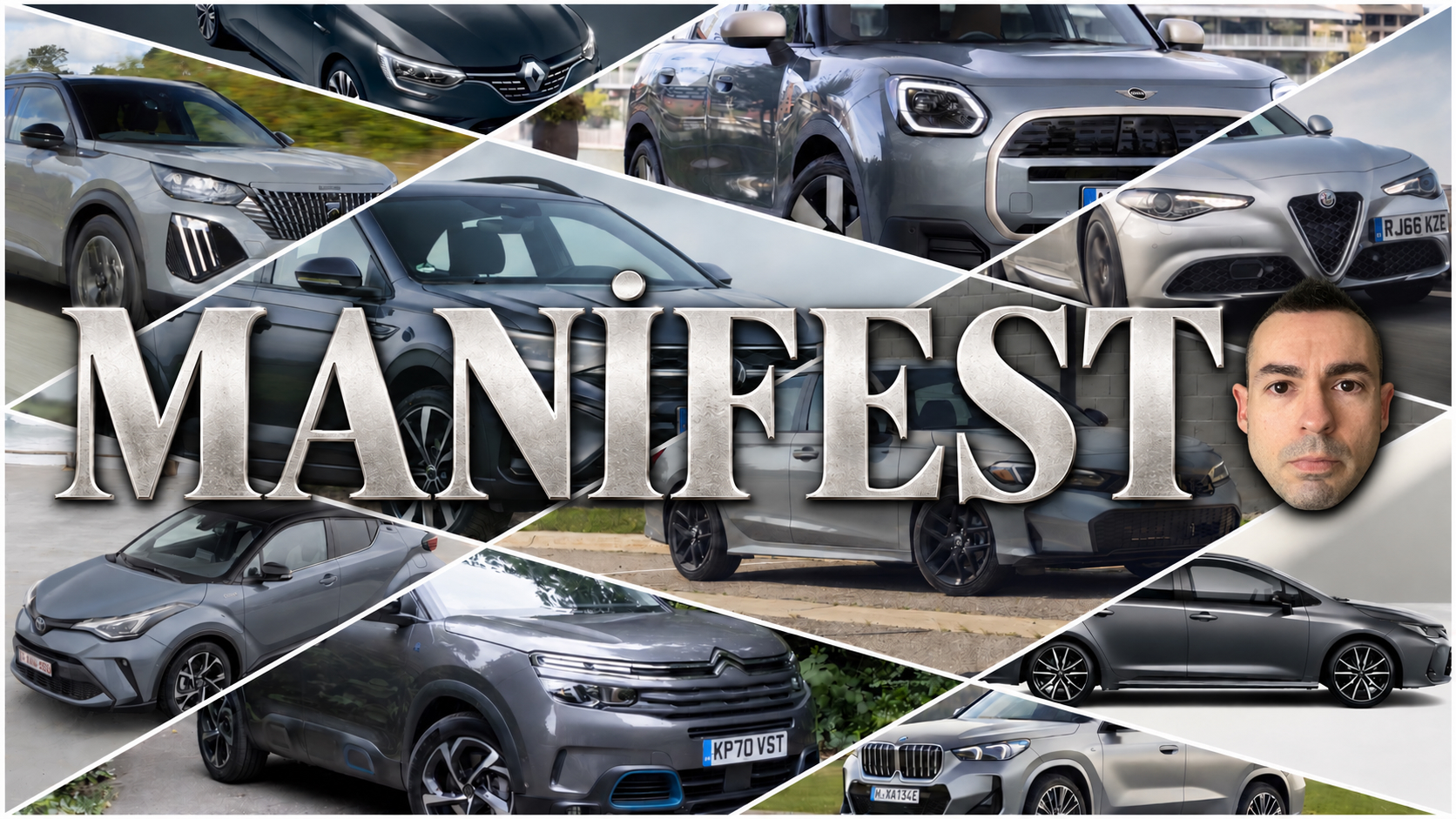
50 shades of chronic issues
Throughout my 17-year career in automotive journalism, I have developed a systematic approach to evaluating cars. This methodology, which I have been refining since 2021, has earned the approval of thousands of followers who have bought cars based on my recommendations. Today, I’ll explain how this system works and clear up some common questions.
The problems we encounter in cars have three fundamental characteristics: prevalence, severity, and cost.
A) The relationship between complaint numbers and sales figures
Nobody can know the exact incidence of a problem—in other words, how many vehicles out of the total are affected:
- Some owners take their cars to authorised service centres, others use independent repair shops, some share their complaints on social media, and others have never even heard of consumer complaint websites.
- So, even when sales figures are available, it is impossible to establish exactly how many people have experienced a particular problem.
- What we need to do, therefore, is broaden our research as much as possible to gather as much feedback as we can.
I don’t judge how widespread a problem is solely by the number of complaints; naturally, I also consider how many units that model has sold.
However, while the argument that “cars that sell more will receive more complaints” is sometimes valid, it cannot, on its own, explain the volume of complaints. For example:
- In 2025, Toyota sold 25,215 C-HRs, while Peugeot sold 22,341 units of the 2008.
- Yet, with the “2025 model year” filter applied on ŞikayetVar, there are currently 8 complaints about the C-HR and 138 about the 2008.
To publish a complaint on ŞikayetVar.com, users must complete several steps, most of which are mandatory:
- Creating an account.
- Verifying their mobile phone number.
- Writing a detailed description of the problem.
- Having their complaint reviewed for compliance with the platform’s rules.
- Uploading photos and videos (optional).
As you can imagine, not everyone who experiences a problem goes to this trouble.
ŞikayetVar is only one of my sources. My main source of feedback is the hundreds of comments posted on my YouTube channel every day and the messages I receive through social media.
Alongside these, I draw on countless other sources, including Turkish and international make-and-model forums, social media posts, owners’ Facebook, WhatsApp, and Telegram groups, and technical service bulletins from around the world.
I do not use these sources to calculate failure rates; I use them to identify recurring complaints and early warning signs.
B) The relationship between the distribution of complaints and reliability
Two cars with similar sales figures may receive similar numbers of complaints, but that alone does not mean they are equally problematic.
What matters here is how those complaints are distributed. For example:
- Suppose two cars, X and Y, each have 10 complaints.
- For X, one issue accounts for seven complaints, while the remaining three concern two other issues—a distribution of 7–2–1.
- For Y, the complaints concern seven different issues, each reported once or twice—a distribution of 1–1–2–1–2–1–2.
In this situation, I focus on X’s issue that has been reported seven times:
- Is the fix simple and relatively inexpensive?
- Is the car itself exceptionally good in any particular respect?
If the answer to both questions is yes, I recommend that model while clearly highlighting its recurring issue. Take the first-generation Citroën C5 Aircross: it certainly receives plenty of complaints, but these are concentrated around camshaft chain failures in pre-2023 examples and AdBlue/DPF issues. The car itself is among the best in its class for both comfort and equipment for the money, so I recommend post-2023 examples, provided buyers take the AdBlue/DPF issues into account.
An example of Y—a model with similar numbers of recurring complaints across a variety of issues—is the VW Taigo. It has recurring complaints in more than 10 areas, ranging from DSG and EPC faults to brake booster problems and water entering the headlights. Nor is it among the class leaders in any particular respect, so I do not recommend it.
C) The relationship between problems and shared platforms
Two cars sharing the same engine, transmission, and platform does not mean they will suffer from the same problems.
Factors such as production date, manufacturing location, and component suppliers can result in different complaints about two cars that share mechanical components.
For example, one of the VW Taigo’s most common issues—water ingress and condensation in its headlights and rear lights—is almost unheard of in the SEAT Arona. Possible reasons for this difference include:
- Both the VW Taigo and SEAT Arona are built in Spain, but the Taigo comes from the Pamplona plant, while the Arona is manufactured in Martorell.
- Varroc manufactures both the headlights and rear lights for the VW Taigo. The SEAT Arona’s headlights are supplied by Valeo, and its rear lights by Magneti Marelli.
- The VW Taigo was introduced in 2022, while the SEAT Arona arrived in 2017. The past decade in particular has shown that, as cars are updated or replaced by newer generations, complaint numbers increase.
For reasons like these, I can recommend the SEAT Arona while advising against its sibling, the VW Taigo.
2. Severity
A problem’s severity is determined by how much it affects the use of the vehicle, whether it can leave you stranded, and whether it poses a safety risk.
If a complaint points to a potentially very serious problem, I investigate it further.
First, I look for similar cases, then contact the people who reported them and investigate whether there is technical evidence supporting the complaint.
I move on to creating content about the issue if:
- I find more than one example of the problem.
- The available information and documentation indicate that it was not caused by user error.
- I find technical evidence, such as a relevant service bulletin or recall.
A problem this serious does not need to become widespread before I inform my followers. If I wait for that, the damage may already be done, with many people suffering financially and/or being physically harmed.
When covering serious problems that are not yet widespread, I never describe them as “chronic”. I say “this risk exists.”
Examples include engine bearing failures in the Toyota Corolla 1.5, and axle failures in the BMW iX1 and electric MINI Countryman. When I first shared these issues with you, there were very few reported cases. But time has shown that they were not isolated incidents, and that these risks do exist in those vehicles.
3. Cost
The cost of a problem is not simply the price of the parts and labour required to prevent it.
Its true cost must also account for the potential expense it can cause if it is not addressed in time.
Not everyone is a well-informed owner, and even if you are, how well the previous owner understood and cared for the used car you are buying remains a huge unknown.
There is also no guaranteed mileage for preventive replacement. Even if everyone says, “Replace this part at 50,000 km and you won’t have any problems,” nobody can guarantee it won’t fail at 45,000 km.
That is why I strongly emphasise certain problems that can cause very expensive damage if not prevented in time, even when the preventive parts and labour are reasonably priced. For example:
- On 1.3 TCe engines, the thermostat itself is a TRY 5,000–10,000 component. But if it is not replaced in time and cracks, leaking coolant can cause overheating and leave you facing TRY 300,000–400,000 for a replacement crate engine.
- The wet timing belt in 1.2 PureTech engines is a TRY 20,000–30,000 component. But if it is not replaced in time and either snaps or sheds debris that blocks the oil pump, the result can again be hundreds of thousands of lira in damage.
The weight I give to cost varies according to the car’s price, intended use, and target buyer:
- For used cars up to around TRY 1.5–2 million and up to the C-segment, reliability and running costs carry much more weight.
- For higher-end, sports, or luxury cars, driving character, comfort, performance, image, and depreciation become more important.
- Regardless of price or segment, the main factors shaping my assessment are the criteria, expectations, and priorities of the follower or channel member asking for my advice.
One final point: You do not need to have personally driven a car to research its recurring problems and long-term reliability. A test drive lasting a few days will not reveal engine, transmission, or electrical and electronic faults that emerge at 50,000–100,000 km anyway. For aspects that require direct experience—such as driving character, comfort, and noise insulation—if I have not personally tested the car, I only discuss widely recognised and accepted strengths or weaknesses, such as the Honda Civic’s road noise or the Alfa Romeo Giulia’s driving enjoyment.
1 Comment