

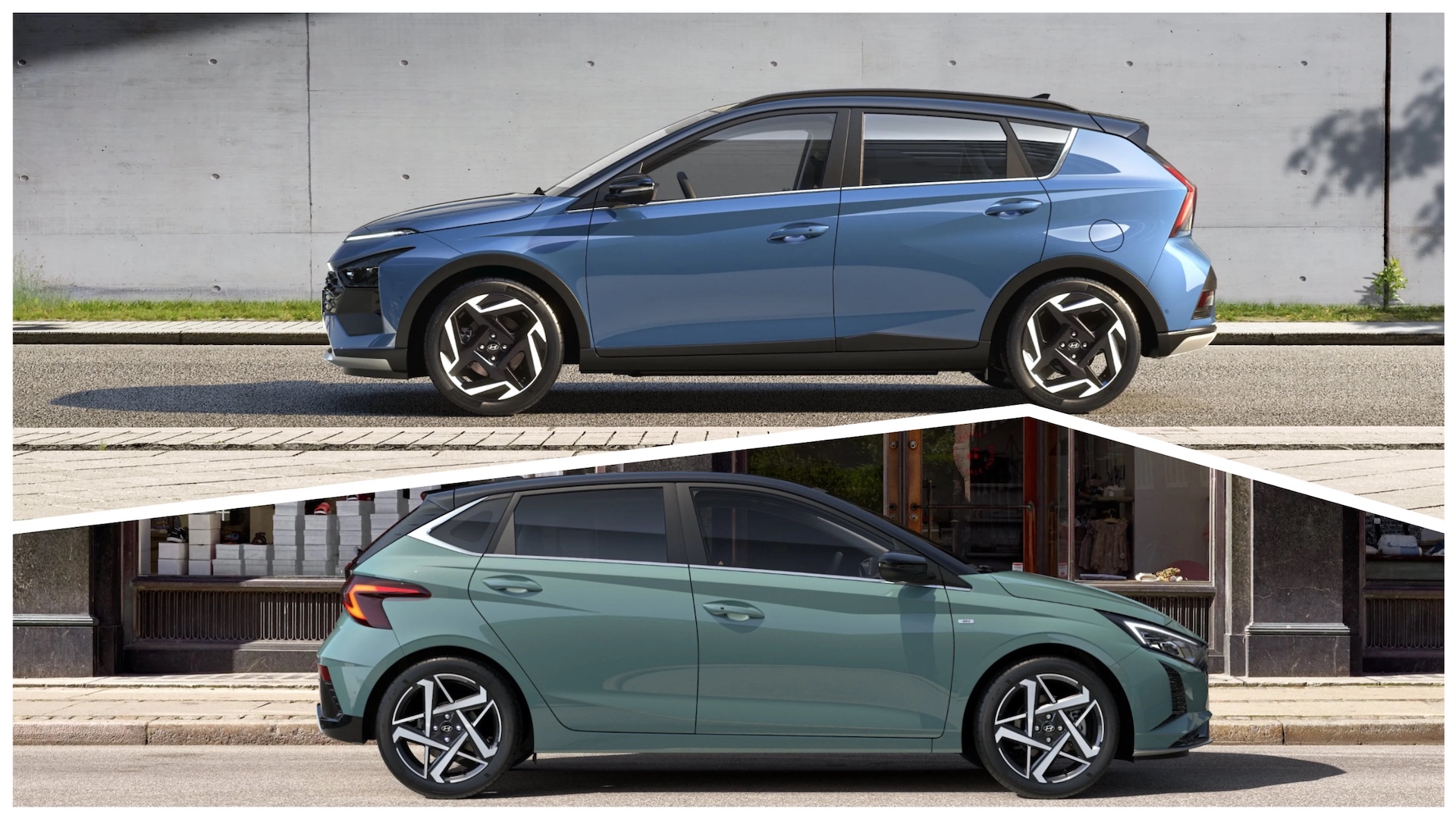
Hyundai i20-Bayon common issues
Compared to European manufacturers, South Koreans—particularly Hyundai—present a more trouble-free image. Two of Hyundai’s most popular models, the current i20 and Bayon, share the same platform and interior. Customers who buy these cars usually prefer the 1.4 MPI / fully automatic combination over the 1.0 T-GDI / DCT, which is considered riskier, in order to “play it safe.”
In fact, the 1.0 T-GDI is among the most reliable of all current 1.0-liter turbo gasoline engines; we’ve previously discussed the DCT’s irregular operation and early clutch replacement. The 1.4 MPI, on the other hand, is part of Hyundai’s Kappa engine family, dating back to the early 2010s. It is also extremely reliable and stands out with full LPG compatibility.
Transmission noise and failures
Especially in the Bayon 1.4 MPI’s 6-speed torque-converter automatic, there is a noise problem caused by transmission fluid heating up during long drives. After about 60–70 km (around 1 hour), a high-pitched buzzing noise starts and the car loses pulling power. This typically happens on inclines, above 3000 rpm. During prolonged city use (40–50 minutes), the same issue appears on steep hills and continues until the slope ends; the sound disappears on flat ground.
The issue is attributed to insufficient cooling of the transmission fluid. Some users resolve the problem by switching to Motul ATF VI or Liqui Moly Top Tec ATF 1800 fluid.
There are also cases where this fully automatic gearbox fails only weeks after purchase, leaving the car stranded with a transmission error. In service, a repair is usually attempted, but in many cases, the issue persists and a complete transmission replacement is required.
Another common complaint is jolts during gear changes.
Sources
Fuel pump issue
Another chronic problem affecting both Bayon and i20, in both 1.4 MPI and 1.0 T-GDI versions, is fuel pump failure. This problem is common in 2020–2023 models; it appears to have been fixed in the 2023 i20 and the 2024 facelift of the Bayon.
The car suddenly loses power and stalls in the middle of the road. Pressing the gas has no effect because no fuel reaches the engine. A temporary fix is to open the fuel cap to release trapped gas and let the car rest. Afterwards, the vehicle must be taken to a service center to replace the fuel pump.
Hyundai is aware of the issue: once you register your car in the My Hyundai app, the relevant recall appears. Customers are usually informed during routine service with the statement: “There’s currently a free fuel pump replacement campaign.” Some service centers require warranty coverage for this, while others also replace the pump free of charge on out-of-warranty cars.
However, due to the widespread nature of the problem, when going to service, customers often have to queue behind dozens of cars waiting for the part. Some are told that the part is out of stock in Turkey and must be ordered from South Korea, with no clear delivery date—sometimes taking 3–4 weeks.
In addition to the pump, the fuel relay and sensor are usually replaced, but these don’t always solve the problem. In some cases, the car then hesitates when moving off, doesn’t respond to throttle, loses pulling power, consumes more fuel, and gear shifts become delayed and noisy.
Sources
Other complaints
The i20 and Bayon are also criticized for stiff suspensions, high fuel consumption, and weak insulation. Other widespread issues include:
- Battery dying before 1 year of use
- Driver’s side window module failure
- Steering lock problems
- Horn malfunction
Sources
- ŞikayetVar 1, 2, 3, 4
19 Comments