

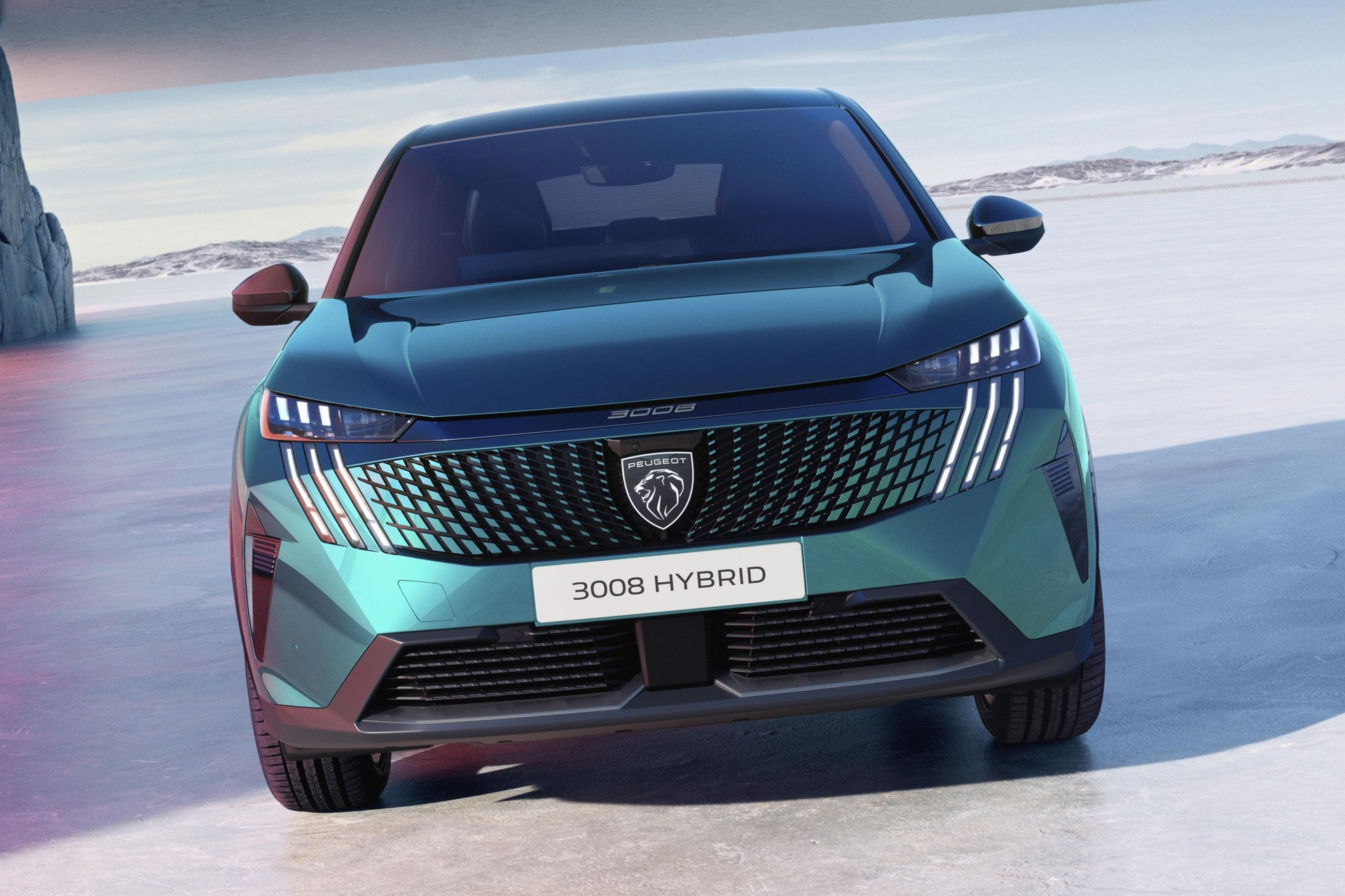
Hybrid PureTech and e-DCS6 problems
We’ve previously discussed the issues with Stellantis’ 1.2 PureTech engines that use a wet timing belt. Since 2020, nearly all engine options in the group have been offered with the 8-speed torque converter transmission called EAT8, manufactured by Japan’s Aisin, known for its reliability and smoothness.
However, starting in 2023 with the new Peugeot 3008 and 5008, Stellantis began switching to a 136 hp hybrid version of the 1.2 PureTech engine that uses a timing chain instead of a belt. This engine is now paired with a new 6-speed dual-clutch transmission called e-DCS6, produced by Belgium-based Punch Powertrain. Although this 48V setup is referred to as an MHEV (mild hybrid) in most sources, it is actually a full hybrid system in terms of its ability to drive fully on electric power.
1. Altitude Issue
In vehicles with this engine, the gasoline engine does not shut off at high altitudes (~above 1500 meters), even if the battery is fully charged. Under these conditions, the electric motor can only operate alone at low speeds (~below 15 km/h); at normal driving speeds like 50–60 km/h, the gasoline engine remains active. This increases fuel consumption: in a sea-level city like Istanbul, the system works as intended and delivers an average of 6 liters/100 km, but in a high-altitude city like Erzurum (~2000 meters), this figure rises to 10 liters.
Root Cause:
The issue lies in the vacuum-assisted braking system. In traditional internal combustion vehicles, the necessary vacuum for braking is supplied from the intake manifold while the engine is running. In hybrids or EVs, where the engine frequently shuts off, electric vacuum pumps provide this vacuum. However, at high altitudes where atmospheric pressure is lower, the pump in the 1.2 PureTech cannot generate sufficient brake vacuum. To maintain safe braking performance, the gasoline engine stays on.
This problem is unrelated to the driving modes; even in Eco mode, the gasoline engine doesn’t shut off in high-altitude areas.
2. The e-DCS6 Puzzle
This new dual-clutch transmission weighs 97 kg and, like Magna’s 7HDT300 or Volkswagen Group’s DQ400e, has an integrated electric motor. Normally, this electric motor produces 21 kW and 55 Nm of torque, and up to 24 kW in generator mode. The battery has a usable (net) capacity of 0.432 kWh and a gross capacity of 0.89 kWh.
The e-DCS6 stands out with some technical distinctions:
- In this gearbox, unlike the examples mentioned earlier, the electric motor is not aligned with the crankshaft. This results in a more compact design.
- Unlike traditional dual-clutch transmissions where one clutch handles odd-numbered gears and the other handles even-numbered ones, the clutches in the e-DCS6 don’t shift gears sequentially. Instead, they operate by locking in two different gear ratio modes. As a result, each physical gear can operate with two different ratios (i.e., 3 physical gears = 6 gear ratios). These transitions are handled by a planetary gear system, and one of the clutches locks this system.
- In fact, the system has not two but three clutches: one that decouples the engine from the transmission (enabling full electric mode), one for locking the low-ratio mode, and one for providing direct connection.
- The clutches are dry type, but the spacing between them has been increased to reduce heat buildup. In addition, oil circulation provides active cooling, with the oil directed specifically at the clutches.
- Using solenoid control valves, the system generates vibrations in the hydraulic circuit to clear out accumulated particles. These particles are directed to a filter, theoretically extending the life of the system.
The Problems
Despite being very new to the market, the e-DCS6 has already been reported to suffer from:
- Getting stuck in gear
- Slow gear changes
- Sudden stalling of the vehicle while driving
- Noise at speeds between 30–50 km/h
- Jerky transitions when the electric motor engages or disengages
- Complete transmission replacements even in cars with only a few thousand kilometers
Common error codes encountered by users include P1749 00 and P28EA 62. Despite a software update in August 2024, the problems persist; in some cases, components like the oil pump valve and inverter are being replaced.
3. Other Complaints
In the new-generation hybrid C3 AirCross models:
- There is engine instability — the vehicle constantly switches between electric and petrol even while stopped at traffic lights, and with each switch the car shakes and jerks.
- At low speeds in particular, there is a rubbing noise from the wheel area that sounds like a “click-click.” In one case, a vehicle with only 200 km on it caught fire, and the cause is linked to this issue.
Sources:
- Facebook/Peugeot e-3008 Club Türkiye
- YouTube/Berk Topaloğlu/Peugeot 5008
- YouTube/Berk Topaloğlu/Opel Grandland
- Peugeotforums.com
- Fiches-Auto.fr
- AutoPlus.fr
- Largus.fr
15 Comments