

The ugly truth behind EV transition
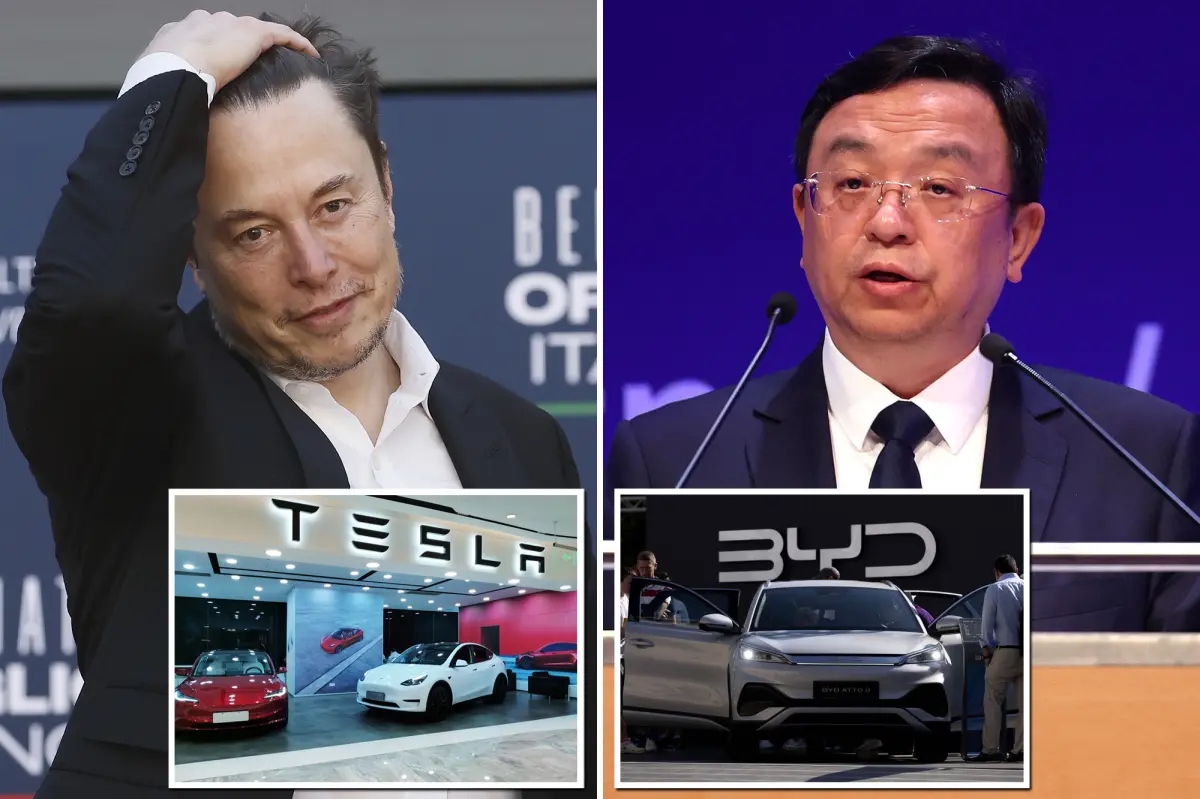
Recently, it was announced that 26% of BYD's 2024 net income came from subsidies. In other words, more than a quarter of the money entering BYD's coffers in a year consists of unconditional financial aid provided by the government.
We already know how much the Jinping administration backs electric car manufacturers in China and provides them with disproportionate support. On social media, this news was interpreted as evidence that BYD and, more generally, Chinese EV brands engage in unfair competition. However, if we examine Tesla’s situation and the EV policies of other governments, we can see that the scale and scope of unfair competition are much broader.
What is a carbon credit?
The carbon credit system, which affects the automotive sector in the U.S., developed as part of environmental policies initiated in the early 1990s and was expanded under different administrations over time.
The foundations of this system were laid during the Bush administration in the 1990s, but it was during the Obama administration that the system was developed in a way that allowed companies like Tesla to profit significantly from it. Although the Trump administration attempted to relax some regulations, the Biden administration further strengthened these policies.
Is it a government subsidy?
Indirectly, yes. Carbon credits are typically part of environmental policies set by governments or international organizations. However, Tesla does not receive this income directly as a government subsidy; it earns carbon credits by producing zero-emission vehicles and sells these credits to other automakers that exceed their emission limits. So, unlike BYD, Tesla's revenue source does not come from direct government payments but from companies that are required to comply with regulations.
Tesla’s carbon credit revenue
In 2024, Tesla earned $2.76 billion from carbon credit sales. This amount accounts for about 33% of the company's $8.4 billion net income during the same period.
Over the past decade, Tesla has earned approximately $10.7 billion from carbon credit sales, making up about one-third of its total profits during that period. This shows how crucial carbon credits are to Tesla’s financial performance.
Is this exclusive to Tesla?
No, carbon credits are not exclusive to Tesla. They are a mechanism applied in many countries and industries. However, since companies like Tesla produce zero-emission vehicles, they accumulate and sell more carbon credits compared to fossil fuel vehicle manufacturers, allowing them to generate significant revenue.
Ultimately, no other major automaker in the U.S. earns as much from carbon credits as Tesla. Because Tesla exclusively produces EVs, it accumulates a large number of carbon credits and sells them to internal combustion engine (ICE) manufacturers.
Companies like GM and Ford also produce EVs, but since they still sell ICE vehicles, they need their own carbon credits and cannot accumulate enough to sell extra.
New-generation EV manufacturers like Rivian and Lucid also earn carbon credits, but since they do not have the same large-scale production as Tesla, they do not generate as much revenue in this area.
What if there were no incentives?
Tesla would not have been profitable in 2024 without carbon credit sales:
2024 net profit: $4.8 billion
Carbon credit revenue: $2.1 billion
Net profit without carbon credits: $4.8 - $2.1 = $2.7 billion
At first glance, it seems Tesla would still be profitable, but these are only the first nine months of data.
In the fourth quarter of 2024, Tesla’s profit dropped by 70%, and net income fell to $700 million. During the same period, Tesla earned $692 million from carbon credit sales.
So, without carbon credits, Tesla would have almost broken even in Q4—neither making a profit nor a loss.
Tesla’s overall profit was already at a low level, and without carbon credits, it would likely have ended 2024 with either a very small profit or a loss.
So?
26% of BYD’s 2024 revenue comes from government subsidies.
40% of Tesla’s 2024 revenue comes from carbon credits, which are also an indirect form of government support.
If you remove government support from the world’s two largest EV manufacturers, they barely remain profitable.
The same applies to consumers: The momentum in EV sales is largely driven by government incentives. In Germany, EV buyers were receiving tax cuts of up to €6,000; when this incentive was removed at the end of 2023, EV sales dropped by 37% in just one year.
Producing a high-displacement, simple internal combustion engine without emission-reducing complications that increase the risk of mechanical failures is no longer possible at reasonable prices. If Renault were to reintroduce the Clio 2 RS today, its price in France would be €102,000—because the car’s carbon emissions are 194g/km, and a €70,000 tax is applied to emissions above 193g/km.
Due to emission-based taxation, BMW's hybrid M5 is sold cheaper than the M3 in Ireland. In some dense city centers like London, Paris, Brussels, Amsterdam, and Berlin, high-emission vehicles are either banned or subject to fees. From 2030 onwards, a full zero-emission rule is expected to be enforced, allowing the M5 to drive in these cities thanks to its EV mode, while the M3 and similar ICE cars will be prohibited from entering.
All of this forced transition is aimed at reducing the carbon footprint of road transport—which accounts for 10% of global CO₂ emissions—by 50-70%.
Final thought
One of the biggest illusions of our time is the belief that we make our decisions with complete free will. However, as with most of our choices, our decisions in automobiles are also made for us. When all regulations are designed to favor one product over another, a fair comparison is impossible.
2 Comments