
Most unreliable VAG engines and their most reliable variants
Unlike the notorious engines we often discuss, today we’ll focus on certain Volkswagen Group units that show significant variations in reliability depending on the production year and version.
1.4 TDI
Volkswagen’s 3-cylinder 1.4 TDI engines were designed as a scaled-down version of the robust 1.9 TDI, removing one cylinder...
However, they don’t quite match the 1.9 TDI’s reputation for reliability.
- AMF (75 HP, 2001–2005): Early-generation engines with simple designs, known for their longevity. Cast iron block.
- BNM/BWB (70 HP, 2005–2009): Notable for lubrication issues and turbocharger failures. High vibration levels and the lack of a balance shaft pose challenges in long-term use. Cast iron block.
- CUS (90 HP, 2014–2021): No longer related to 1.9 TDI; new design, aluminum block. Features reduced vibration and an improved injection system but remains prone to EGR valve and turbocharger durability issues.
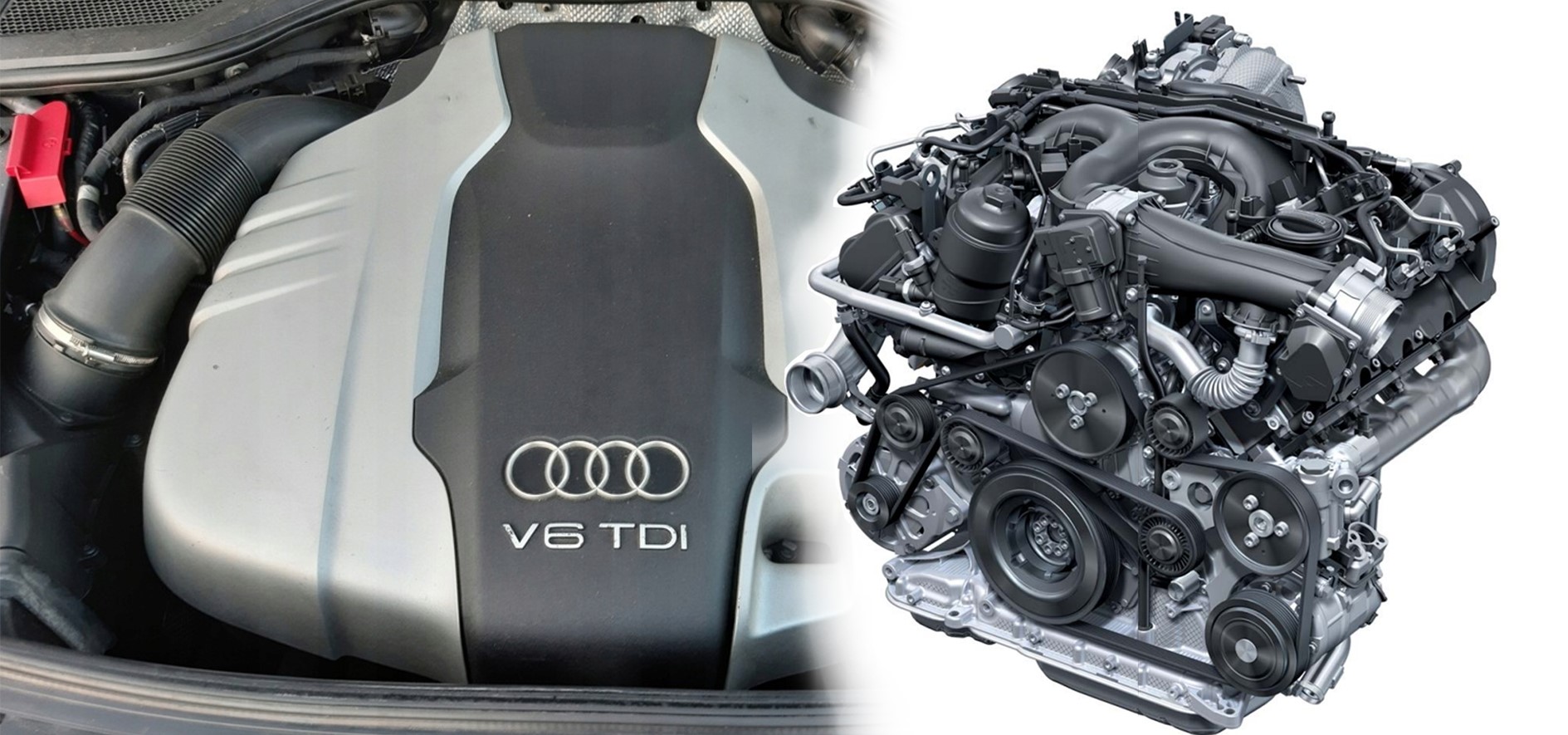
3.0 TDI (V6 CR TDI and BiTDI)
Often found in Audi A6 C7 models, this engine offers high torque and performance and is generally reliable, though some versions have notable issues.
- CJGA (204 HP, 2012–2014): Its lower power output means less mechanical stress, making it highly durable.
- CAS (240 HP, 2008–2012): Early-production versions are known for DPF (Diesel Particulate Filter) and EGR issues but are mechanically robust.
- CRT (211/272 HP, 2010–2018): Known for high-pressure common-rail injection and AdBlue system failures. Crankshaft bearing wear and timing chain tensioner issues are also common, particularly in the 272 HP variant, which is more prone to oil pump failures at high mileage.
- CMEA (313 HP, 2012–2015): While complex due to its twin-turbo setup, it’s mostly reliable aside from EGR and DPF failures. Member of EA897 Evo 1 family.
- DAVA (224 HP, 2016–2022): This engine, featured in the VW Amarok, belongs to the EA897 Evo 2 generation and was designed with durability and off-road requirements in mind. Differences are noticeable in components like the crankshaft, piston design, and cooling system. Common issues include AdBlue, EGR, and DPF failures, typical of most modern diesel engines. Additionally, the high-pressure fuel pump (CP4.2) is sensitive to low-quality diesel, which can lead to injector damage due to metal shavings.
- DBGC (286 HP, 2018–): Found in models like the VW Touareg and Audi Q7, this Euro 6d engine is part of the EA897 Evo 3 family and is an improved version of the earlier DAVA-coded unit. Optimizations in software calibration, turbo mapping, and thermal management provide higher power and a more refined driving experience. However, potential issues remain similar to those of the 224 HP variant.
1.4 TSI (Twincharger)
This innovative engine combined a turbocharger and a supercharger...
- CAV (140–180 HP, 2006–2012): Early versions suffered from timing chain tensioner failures, piston melting, and excessive oil consumption. The chain tensioner’s design posed a significant risk of chain skipping.
- CTH (160–180 HP, 2012–2014): Improved piston and ring designs reduced issues compared to the CAV, but carbon buildup and oil consumption persisted.
- CZC (2014–): The CZC 1.4 TSI engines (with ACT cylinder deactivation) dropped the twincharger setup in favor of a turbo-only design, improving durability.
1.8 TFSI
Produced under the EA888 series, these engines share common issues like carbon buildup and should not be confused with older, more robust 1.8 T engines.
- CDA (160 HP, 2008–2011): Known for excessive oil consumption due to piston ring design flaws, along with timing chain tensioner and PCV valve failures.
- CJEB (170 HP, 2012–2015): Updated piston rings reduced oil consumption, but carbon buildup remained a major issue.
- DKRA (180 HP, 2015–): Improved cooling and fuel injection systems make it more reliable overall.
2.0 TFSI (EA888 Gen 1–3)
Part of the EA888 series, the 2.0 TFSI engines are praised for their power-to-weight ratio but share design flaws similar to the 1.8 TFSI.
- CAWB (200 HP, 2006–2009): Commonly plagued by excessive oil consumption, carbon buildup, and durability issues in the PCV and turbo systems.
- CJXC (220 HP, 2012–2016): As a Gen 3 version, it is more reliable. Thermostat and water pump issues are reduced but not entirely resolved.
- DKZA (245 HP, 2019–2022): The most reliable version, with reduced carbon buildup and an improved lubrication system.
The Volkswagen Group engines not mentioned above do not have any significant issues. Notably, the 1.6 TDI, 1.9 TDI and single-turbo 1.4 TSI engines are distinguished by their robust design. The 2.0 TDI engines with CR (common-rail) codes after 2008 are largely reliable, with the most durable versions being the post-2020 Evo models. However;
- 1.5 TSI (DADA, pre-2020): Manual transmission versions experienced a "kangaroo effect" (jerky operation) at low RPMs. This issue was largely resolved in later Evo2 versions.
- 1.0 TSI (CJP, pre-2020): Due to the inherent vibrations of a 3-cylinder design, frequent engine mount replacements are required. Early models had chronic thermostat failures, which were addressed in subsequent DKRF-coded variants.
- 1.2 TSI (CBZA/CBZB, pre-2015): The first-generation (EA111, 8 valves) was known for issues with its timing chain tensioner, which led to lubrication failures and excessive oil consumption. The turbocharger durability was average, with some reports of early failures. The second-generation EA211 engines (2015 onward, CJZA/CJZC, 16 valves, BlueMotion) addressed these issues by switching from a timing chain to a belt-driven system.
- 1.6 FSI (BAG, BLF, BLP, BSE, BSF): Known for issues such as EGR and oxygen sensor failures, variable valve timing mechanism malfunctions, spark plug and ignition coil failures, fuel pump and injector problems, carbon buildup, high fuel consumption, and low performance.
23 Comments