

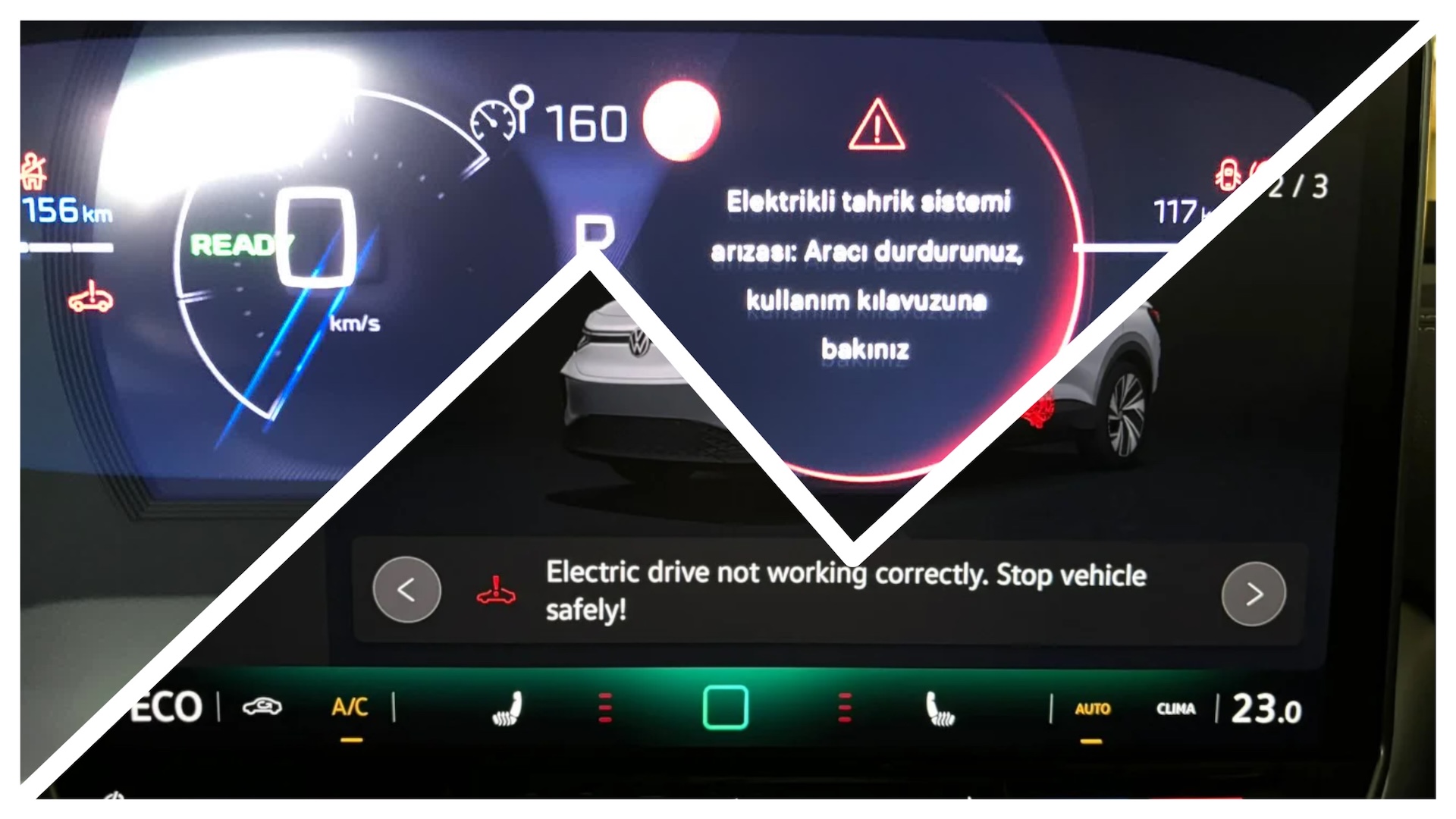
Drive system failures in VAG and Stellantis EVs
One of the main reasons people buy electric cars is that they contain fewer moving parts than conventional petrol or diesel vehicles and are therefore expected to be more reliable. However, this theory does not seem to hold up particularly well for electric models produced by European manufacturers, especially those from the Volkswagen and Stellantis groups.
The variety of mechanical problems that can occur is still smaller, but when something does go wrong, some failures can leave the vehicle stranded — and, more seriously, may even put the driver and passengers at risk. One of the most prominent of these issues is the drive system fault.
Which models are affected?
Models based on the Volkswagen Group’s MEB platform:
- Audi Q4 e-tron
- Cupra Born
- Cupra Tavascan
- Skoda Elroq
- Skoda Enyaq
- VW ID.3, ID.4, ID.5, ID.7, ID.Buzz
Models based on the Volkswagen Group’s PPE platform:
- Audi A6 e-tron/S6 e-tron
- Audi Q6 e-tron/SQ6 e-tron
- Porsche Macan Electric
Models based on Stellantis Group’s Smart Car Platform:
- Citroën ë-C3
- Citroën ë-C3 Aircross
- Fiat Grande Panda
- Opel Frontera Electric
Models based on Stellantis Group’s eCMP/e-CMP2/EMP2 V3 platforms:
- Alfa Romeo Junior
- Citroën ë-C4
- Citroën ë-C4 X
- Fiat 600e
- Jeep Avenger Electric
- Opel Astra Electric
- Opel Corsa-e
- Opel Mokka-e
- Peugeot e-208
- Peugeot e-308
- Peugeot e-2008
Models based on Stellantis Group’s STLA Medium platform:
- Peugeot E-3008
- Peugeot E-5008
- Opel Grandland Electric
- Citroën ë-C5 Aircross
- Jeep Compass Electric
- DS N°8
What happens?
Some of the warning messages displayed on the screen include:
- 12V supply: Please visit workshop.
- Error: Drive system. Please visit workshop.
- Electric traction system fault: Stop the vehicle.
- Electric drive is not working correctly. Stop the vehicle safely.
Some of the reported symptoms include:
- The accelerator pedal becomes unresponsive.
- The steering suddenly becomes extremely heavy.
- The brake pedal becomes extremely hard.
- The vehicle suddenly loses throttle response and propulsion while driving.
- The vehicle will not engage D/R or becomes stuck in P.
What causes it?
Common root causes across both groups include:
- Software faults in the battery management system (BMS) and other control units.
- Connection, wiring or insulation problems within the high-voltage system.
- Cell or module failures in the high-voltage battery.
- Traction motor or inverter failures.
Causes that appear more frequently within the Volkswagen Group include:
- A weak or failed 12V battery.
- DC/DC converter or related control-electronics failures.
Causes that appear more frequently within the Stellantis Group include:
- On-board charger (OBC) failure.
- High-voltage air-conditioning compressor failure or insulation leakage.
Repair process
Because these failures often leave owners stranded, the first thing many users try is switching the vehicle off, locking it and waiting for 15–30 minutes. After that:
- Once the control units enter sleep mode and reboot, the fault may temporarily disappear and the car may become driveable again; however, the problem can return later.
- In some cases, the issue is caused purely by software or the 12V system and can be resolved with a reset, software update or battery replacement.
- With moisture- or water-related connector or insulation problems, the fault may temporarily disappear once the connection dries out.
- If hardware such as the OBC, air-conditioning compressor, high-voltage cable, DC/DC converter or battery is faulty, the affected component has to be replaced.
- If the required part is not in stock, waiting times can stretch from several weeks to several months.
- The lack of a replacement/courtesy vehicle during this process is also a recurring complaint.
Costs
Most of these vehicles are still under warranty, so repairs are generally carried out free of charge. However, because certain external components are not covered by the battery warranty, dealers may still charge owners for their replacement. For example:
- In the summer of 2025, two owners of 2023 Opel Mokka-e vehicles that had broken down with an “electric drive system fault” were quoted TRY 30,000–35,000 for replacement of the electric drive wiring harness.
- In early 2024, an ID.3 owner in the UK took the car to a dealer after receiving an electric-drive warning and being unable to engage D. An insulation fault was found in the HV wiring harness. The quoted costs were £1,400 for diagnosis, £3,500 for the wiring harness and £2,500 for the charging unit — equivalent to a total of approximately TRY 485,000 at today’s exchange rate.
- In July 2026, the owner of a 2020 Audi E-tron with only 48,000 km was told that the vehicle’s traction motor had failed and required replacement, with an estimated repair cost of TRY 480,000.
4 Comments