

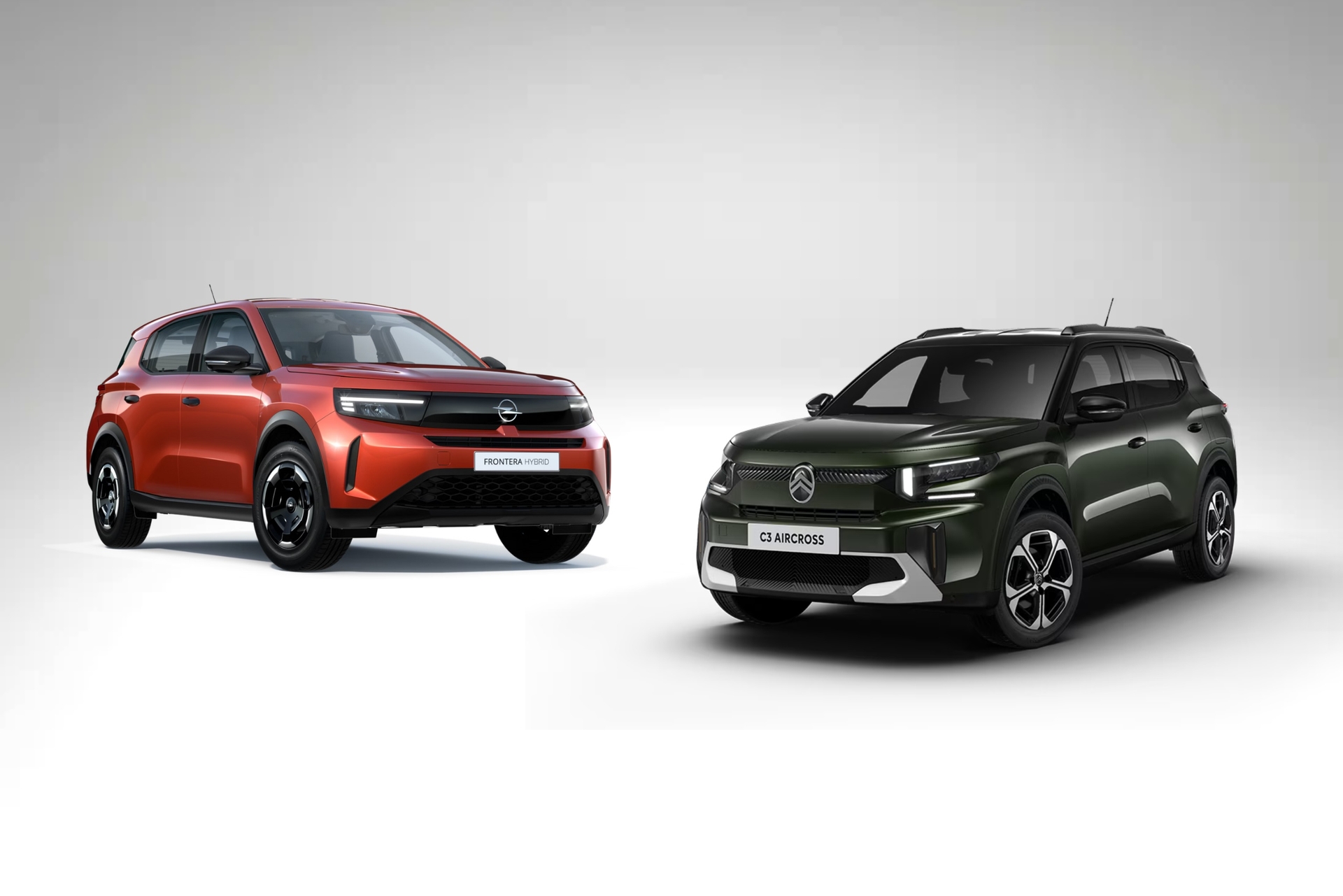
Citroën ë-C3 Aircross and Opel Frontera issues
Citroën ë-C3 Aircross, Opel Frontera Electric, and the newly launched Fiat Grande Panda are electric crossovers that use Stellantis’s Smart Car Platform and share the same mechanical architecture. The purpose of this platform is to offer a much lower-cost electric vehicle architecture compared to traditional European platforms such as e-CMP (models like the Alfa Romeo Junior, Fiat 600e, Jeep Avenger, and Peugeot e-208 are based on e-CMP). The ë-C3 Aircross and Frontera are produced in Slovakia, while the Grande Panda is manufactured in Serbia.
Complaints about the Opel Frontera and Citroën ë-C3 Aircross, which were launched in Turkey in May 2025, have not yet become widespread on the Grande Panda side, which has only been on the market for about a month. Among the other two models, especially on the Opel side, the number of users experiencing problems has increased so much that one user even started a campaign on change.org to demand solutions.
1 . Electrical, electronic, and workmanship issues
Common complaints that frequently leave users stranded, prevent them from charging their vehicles, or force them to leave the car at the service center for weeks while waiting for a solution include the following:
- Electric drivetrain malfunction
- ABS/ESP/ASR system malfunction
- Parking brake malfunction
- Battery malfunction
- Gear selector malfunction
- Charging port malfunction
- Tire pressure monitoring system malfunction
- Vehicle pulling to the left or right
- Brake light malfunction
- CarPlay connection error
- Misalignment of the tailgate
- Peeling plastic on the steering wheel hub
- Paint peeling on the roof, side mirrors, and tailgate
- Broken seat springs and collapsed seat cushions
- Water ingress and cracking from the roof, rearview mirror, and tailgate
- Ignition malfunction and the vehicle not starting (despite being electric, these cars still require inserting and turning an ignition key to start)
Naturally, those who encounter such problems in a brand-new car request replacement or a refund. However, among these users, only those whose complaints go viral on social media tend to have their requests accepted.
Another very common complaint is delayed delivery: even after customers make their payments, their vehicles are sometimes not delivered for one or even more than two months.
Sources
2 . Technical weakness
The Frontera is offered with two LFP battery options, 44 kWh and 54 kWh, both sold with GS trim. As of today, the sales price of the 44 kWh version is 1,838,000 TL, while the 54 kWh version is 1,950,000 TL. The ë-C3 Aircross, on the other hand, is available in a single version (83 kW motor, Standard Range, Max trim) with a list price of 1,809,000 TL.
Both vehicles produce 113 hp and 125 Nm of torque, with a top speed of 143 km/h. With the standard battery, the unladen weights of the Frontera / ë-C3 Aircross are 1514 / 1504 kg. One of the most common complaints from owners of these vehicles is getting stuck on inclines and being unable to pull away: on uphill sections, the electric motor goes into a self-protection mode, the cooling fan turns on, and the vehicle becomes immobilized. Users who are left stranded have to let the car roll back and “try again” to climb the hill with more momentum; even turning off traction control does not help. Those who ask service representatives about the issue receive the answer “we don’t know either.”
In fact, with these technical specifications, the vehicle should physically—and theoretically—be able to pull away on slopes of up to 20% gradient. However, when software-based limitations (efforts to protect the motor and inverter) come into play, this kind of problem seems to emerge.
The WLTP range figures for the 44 kWh models are 301 / 303 km, but users report seeing around 150 km in real use, especially in cold weather. It is a well-known fact that EV range decreases as ambient temperature drops; however, because these vehicles do not have a heat pump and were marketed by sales consultants with promises such as “it will go at least 250 km in the worst case,” users are disappointed after purchasing the car.
As of 2025, the out-of-warranty replacement cost of the 44 kWh battery is approximately 1 million TL.
Sources
3 . What about the hybrids?
In the 1.2 PureTech hybrid versions of these two crossovers, the following problems—some of which we also mentioned in our June 2025 article—are present:
- Altitude-related issues
- Engine failures
- Transmission failures
- Unstable transitions between gasoline and electric motors
- Start/stop system engaging excessively
- Regenerative braking system becoming disabled
- Parking sensors activating randomly
- The vehicle braking suddenly on its own
- The vehicle accelerating on its own
- Brake hydraulic fluid leakage
- Air conditioning not working
- Pedestrian warning system malfunction
- Overheating and fire
Sources
15 Comments