

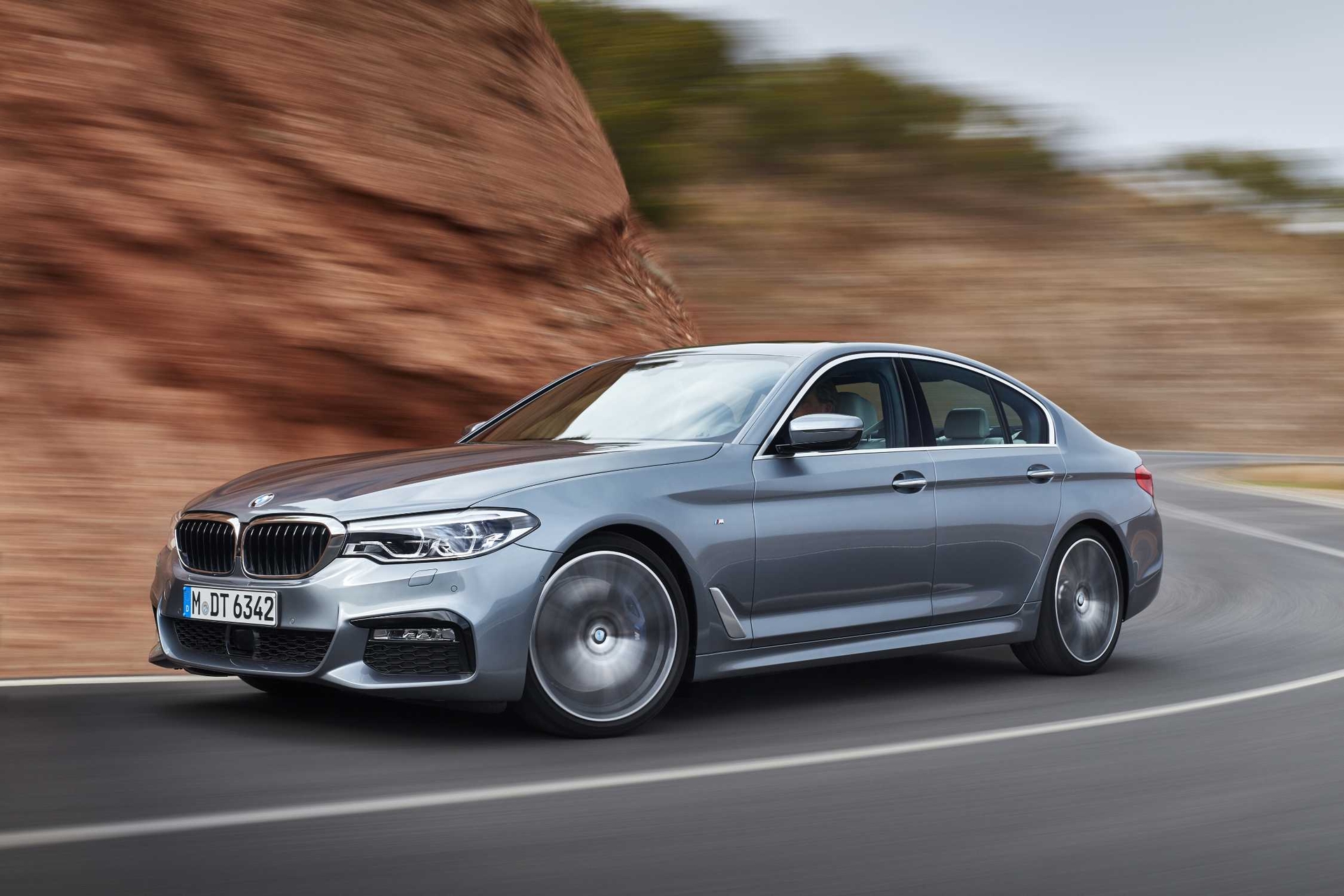
BMW G30 vibration problem
Before diving into the vibration issue commonly observed in the G30-generation BMW 5 Series produced between 2018 and 2024—an issue that can become quite complex to resolve—let's first discuss the approach we should take when diagnosing such vibrations in any vehicle, regardless of the make and model.
To measure the vibration frequencies that occur at speeds above 100 km/h, you can download a mobile application called NVH (Noise Vibration Harshness) on your phone:
- Low-frequency vibrations (~15-18 Hz) often indicate an imbalance in the wheel assembly, primarily due to alignment or balancing issues. All components rotating at this frequency should be considered, including brake discs and parts that could influence rotation, such as calipers or brake pads. These types of vibrations are generally perceived as a knocking sensation—felt in the seat if the issue is in the rear wheels and in the steering wheel if the issue is in the front wheels.
- Mid-frequency vibrations (~30 Hz) feel more like a rattling sensation rather than knocking and may point to components such as engine or transmission mounts, exhaust connections, or any engine-related parts.
- High-frequency vibrations (~50 Hz) often produce a buzzing sensation and can indicate issues with the driveshaft assembly, carrier bearings, or related components. Wheel bearings can also be a source of such vibrations, which become more noticeable when cornering.
The vibration issue frequently encountered in G30 models at speeds between 120-140 km/h is particularly challenging to diagnose and fix. Different balancing methods, wheels, and tires fail to resolve the problem. In Germany, a user took their car to a dealership under warranty, and since BMW's R&D center was near the dealership where the vehicle was purchased, the case was accepted for investigation at the center. The issue was resolved, and the details of the procedure were shared with the customer via email.
The rubber rear axle bushings were replaced with hydraulic, oil-filled bushings used in the G11 7 Series and G14 8 Series. If you're experiencing this issue, you need to find the corresponding part number, have the rear axle removed, and install the hydraulic bushings from the 7 or 8 Series. In Turkey, Borusan (BMW's official distributor) does not provide support for this issue, even if the vehicle is under warranty, and often dismisses it as being caused by "road conditions in Turkey."


Wait, it's not over yet
Even if G30 owners solve the issue this way, the vibration reappears when they switch to winter tires—but this is a different kind of vibration.
The problem is that the summer tires are run-flat and "star-marked" (OEM BMW equipment), while the winter tires are standard and not original BMW equipment. For the G30, it doesn't matter whether they're summer or winter tires; you need to use star-marked and run-flat tires specifically made for the BMW 5 Series (such as the Michelin Pilot Sport 4 ZP) because the suspension calibration is designed for them. Otherwise, you’ll experience vibrations again at different frequencies.
I would like to thank my follower for reaching out to me and for his contributions to this article.
Sources
10 Comments