

Most reliable cars under 500.000TL
Starting today, we’re beginning to list cars that won’t leave you stranded, won’t give you headaches, and won’t burn a hole in your pocket. Our “Most Reliable Cars” series will cover different price ranges, and in each episode I’ll make 3 recommendations. I’ll also try to ensure variety by choosing models from different segments or body types. If there are multiple options in the same segment offering a similar level of reliability, I’ll share the one that delivers better value for money and offers qualities beyond reliability (comfort, insulation, road holding, etc.).
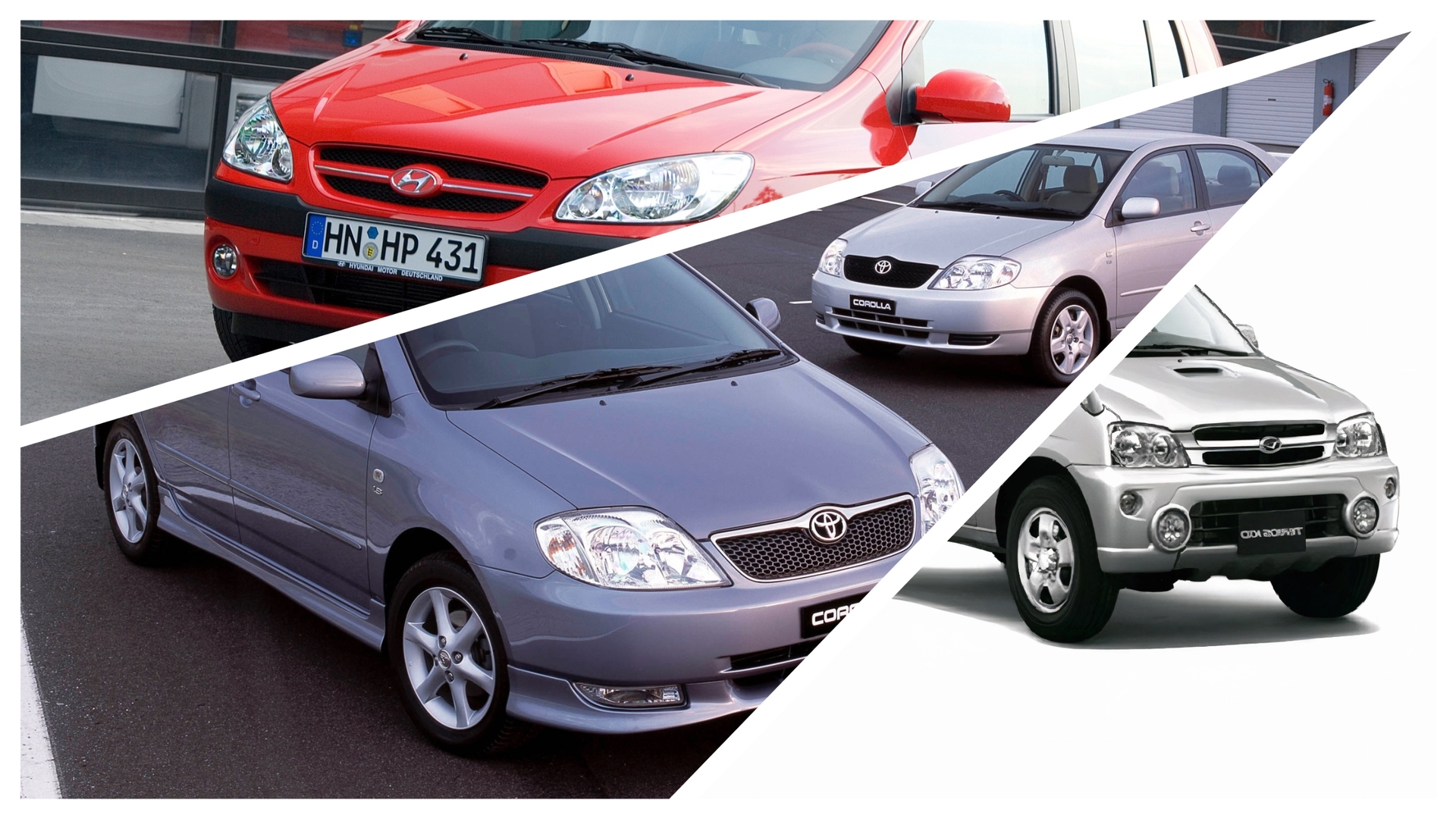
Hyundai Getz (2002–2011)
Engines: Until the 2006 facelift, 82 hp 1.3 gasoline; afterward, 97 hp 1.4 gasoline. In the 1.5 CRDi diesels, the 3-cylinder versions made 82 hp before 2006; the facelift introduced 4-cylinder versions (VGT) with 88 or 110 hp. My recommendation is the 1.4 DOHC.
Automatic transmission: 4-speed torque converter automatic in gasoline models; no automatic option in diesels.
Trim: In facelifted models, the base “Start” package does not have ABS but includes a driver airbag. The “Cool” trim adds ABS, driver and passenger airbags, automatic rear windows, and electric/heated mirrors. No version has ESP.
Watch out for: Steering noise, stiffness and EPS failures; immobilizer antenna (key not recognized); fluctuating idle. Avoid examples without ABS.
Toyota Corolla (2002–2007)
Segment: C-sedan/hatchback/MPV (Verso)
Engines: In the E120 generation, the most common option is the 110 hp 1.6 VVT-i gasoline. The 90 hp 1.4 D-4D diesel was sold in 2006–2007. My recommendation is the facelifted 1.6 VVT-i from 2005 onward.
Automatic transmission: Diesels come with a 5-speed MMT (automated manual). Gasoline versions use a 4-speed torque converter automatic.
Trim: The Sol trim adds features over Terra such as digital climate control, rear disc brakes, and steering-wheel-mounted audio controls. All versions have ABS and dual airbags as standard, but no ESP. Facelifted models may include additional equipment such as side airbags.
Watch out for: Steering noise and oil consumption in 2002–2004 gasoline models. In MMT transmissions: actuator failure, rollback on hills, and jerky shifts.
Daihatsu Terios (1998–2007)
Segment: B-SUV
Engine: 83 hp 1.3 gasoline until the 2004 facelift; 86 hp afterward. 4x4. My recommendation is the 86 hp version.
Automatic transmission: 4-speed torque converter automatic.
Trim: Higher-spec models are SX; they include air conditioning, power windows, electric mirrors, and remote central locking. Dual airbags are standard in all versions; some DX trims do not have ABS.
Watch out for: The 83 hp engines use a timing belt and are prone to head gasket failure; the 86 hp engines, co-developed with Toyota, use a timing chain and are more robust. Differential noise, weak road handling, and hard-to-source body parts.
15 Comments